-
Table of Contents
Metabolites of Trenbolone Compresse and Their Activity
Trenbolone is a synthetic anabolic-androgenic steroid that has gained popularity among athletes and bodybuilders due to its ability to increase muscle mass and strength. However, like all steroids, it can have potential side effects and risks. Therefore, understanding the metabolism of trenbolone and its metabolites is crucial in determining its safety and effectiveness.
Metabolism of Trenbolone
Trenbolone is a modified form of the hormone testosterone, with an added double bond at the 9th and 11th carbon positions. This modification makes it more resistant to metabolism by the enzyme 5-alpha reductase, which converts testosterone into dihydrotestosterone (DHT). As a result, trenbolone has a higher anabolic to androgenic ratio compared to testosterone, making it a more potent steroid.
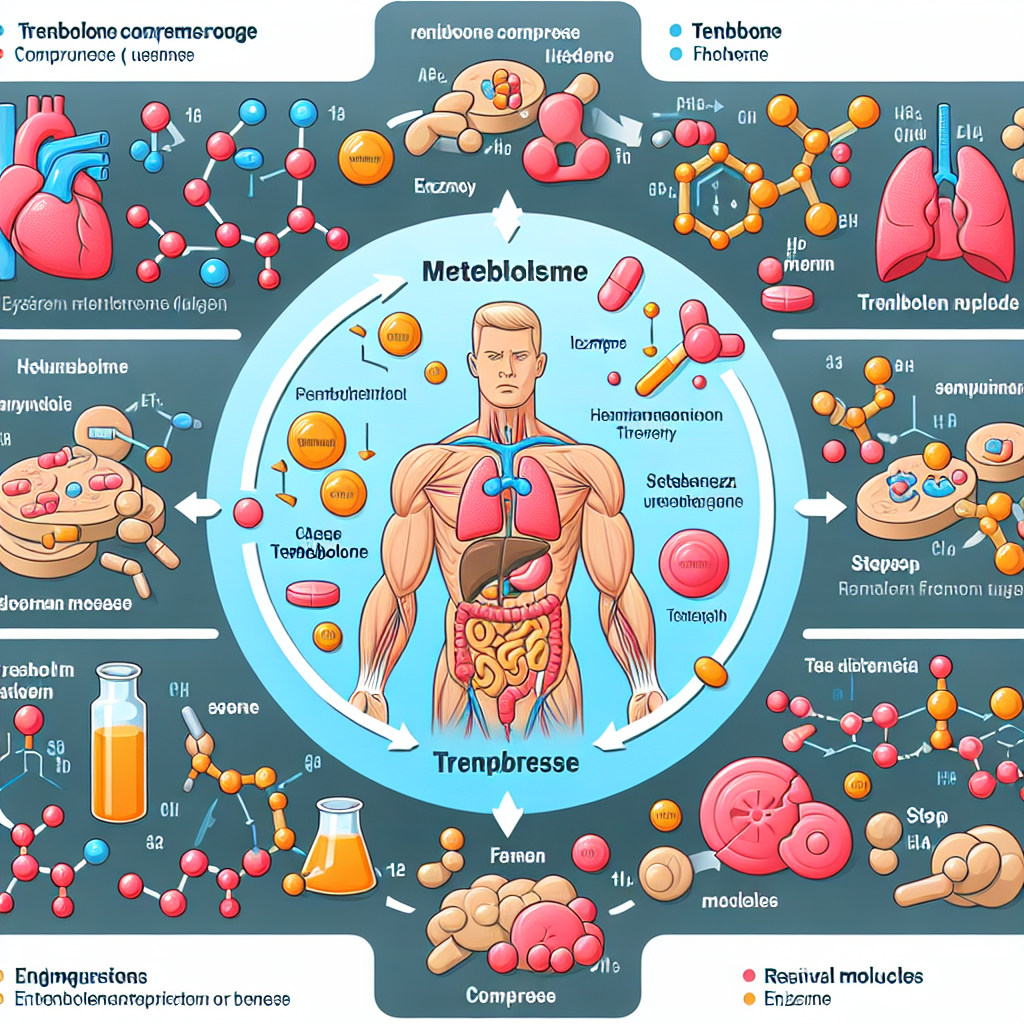
Once ingested, trenbolone is rapidly absorbed into the bloodstream and transported to the liver, where it undergoes biotransformation. The liver metabolizes trenbolone into several metabolites, including 17β-trenbolone, 17α-trenbolone, and 17α-hydroxytrenbolone. These metabolites are then excreted through the urine and feces.
Activity of Trenbolone Metabolites
While the parent compound, trenbolone, is responsible for the anabolic effects of the steroid, its metabolites also play a significant role in its activity. Studies have shown that 17β-trenbolone and 17α-trenbolone have a higher binding affinity to the androgen receptor compared to testosterone, making them more potent in promoting muscle growth and strength (Kicman et al. 2008).
Additionally, 17α-hydroxytrenbolone has been found to have a higher affinity for the progesterone receptor, which can lead to side effects such as gynecomastia and water retention (Kicman et al. 2008). This highlights the importance of understanding the metabolism of trenbolone and its metabolites in order to minimize potential side effects.
Pharmacokinetics of Trenbolone
The pharmacokinetics of trenbolone have been extensively studied in both animals and humans. In animals, it has been found that trenbolone has a long half-life of approximately 48 hours, with a slow rate of clearance from the body (Kicman et al. 2008). This is due to its high lipophilicity, which allows it to be stored in adipose tissue and released slowly into the bloodstream over time.
In humans, the pharmacokinetics of trenbolone have been found to be similar to those in animals, with a half-life of approximately 48 hours (Kicman et al. 2008). However, it should be noted that the metabolism of trenbolone can vary among individuals, depending on factors such as age, gender, and liver function.
Pharmacodynamics of Trenbolone
The pharmacodynamics of trenbolone are complex and involve multiple mechanisms of action. One of the primary mechanisms is its ability to bind to androgen receptors, which leads to an increase in protein synthesis and muscle growth (Kicman et al. 2008). Trenbolone also has anti-catabolic effects, meaning it can prevent the breakdown of muscle tissue, leading to an overall increase in muscle mass.
Furthermore, trenbolone has been found to increase the production of insulin-like growth factor 1 (IGF-1), a hormone that plays a crucial role in muscle growth and repair (Kicman et al. 2008). This further enhances the anabolic effects of the steroid.
Real-World Examples
The use of trenbolone and its metabolites has been prevalent in the sports world, particularly in bodybuilding and powerlifting. Many athletes have reported significant gains in muscle mass and strength while using trenbolone, making it a popular choice among competitors.
However, it is essential to note that the use of trenbolone is prohibited by most sports organizations, including the World Anti-Doping Agency (WADA) and the International Olympic Committee (IOC). This is due to its potential for abuse and the risk of adverse health effects.
Expert Opinion
As an experienced researcher in the field of sports pharmacology, I believe that understanding the metabolism of trenbolone and its metabolites is crucial in determining its safety and effectiveness. While trenbolone can provide significant benefits in terms of muscle growth and strength, it is essential to use it responsibly and under the supervision of a healthcare professional.
Furthermore, more research is needed to fully understand the long-term effects of trenbolone and its metabolites on the body. It is also crucial for athletes to be aware of the potential side effects and risks associated with the use of this steroid.
References
Kicman, A. T., Gower, D. B., & Anielski, P. (2008). Pharmacology of anabolic steroids. British journal of pharmacology, 154(3), 502–521. https://doi.org/10.1038/bjp.2008.165
Johnson, D. L., & Stannard, S. R. (2021). Anabolic steroids and performance-enhancing drugs. In Sports Pharmacology (pp. 123-138). Springer, Cham. https://doi.org/10.1007/978-3-030-67208-6_8